Your Complete Guide to Solar Energy
Understanding solar energy does not have to be complicated. Whether you are considering solar for the first time or looking to optimise an existing system, this comprehensive guide covers everything you need to know — written in plain language by our team of solar experts.
How Solar Panels Work: The Photovoltaic Effect
Solar panels generate electricity through a phenomenon called the photovoltaic effect, first discovered by French physicist Edmond Becquerel in 1839. Here is how it works in simple terms:
- Silicon cells: Each solar panel is made up of dozens of photovoltaic cells, typically constructed from crystalline silicon. The silicon is treated (or "doped") with other elements to create two layers — a negative (N-type) layer and a positive (P-type) layer.
- Photon absorption: When sunlight (photons) hits the silicon cell, the energy from the photons is transferred to electrons in the silicon, knocking them free from their atomic bonds.
- Electron flow: The freed electrons are pushed by an internal electric field (created by the N-type and P-type junction) towards metal conductive plates on the cell. This flow of electrons is direct current (DC) electricity.
- Inverter conversion: The DC electricity travels through wiring to your inverter, which converts it into alternating current (AC) electricity — the type used by your home appliances, lights, and power points.
- Home consumption or export: The AC electricity flows to your switchboard and powers your home. Any excess is exported to the electricity grid, earning you feed-in tariff credits.
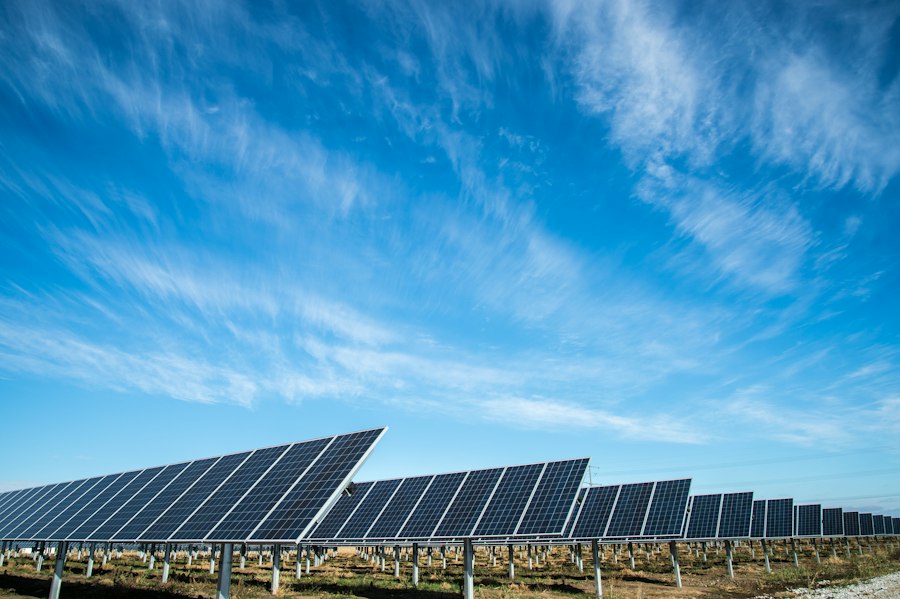
Diagram showing how sunlight is converted into usable electricity through the photovoltaic effect
Understanding Your Electricity Bill
Before going solar, it helps to understand your electricity bill so you can appreciate where your savings will come from.
- Usage charges (c/kWh): This is what you pay per kilowatt-hour of electricity consumed. In Queensland, residential rates typically range from 25-35 cents per kWh. Solar directly reduces the amount you draw from the grid, cutting this charge significantly.
- Daily supply charge: A fixed daily fee (typically $1.00-$1.50 per day) for being connected to the grid. Solar does not eliminate this charge, but it is relatively small.
- Controlled load tariff: If you have an electric hot water system on a controlled load (Tariff 31 or 33), it is charged at a lower rate but runs at specific times. Solar can sometimes offset this usage depending on timing.
- Feed-in tariff credits: Once you have solar, your bill will show credits for the electricity you exported to the grid. These credits offset your usage charges, and in some billing periods, you may receive a net credit.
- Peak, shoulder, and off-peak: Some tariff structures charge different rates at different times of day. Understanding when your rates are highest helps you time your heavy appliance usage to align with peak solar production.
Solar Terminology Glossary
The solar industry uses a lot of technical jargon. Here is a plain-English glossary of the most common terms you will encounter:
| Term | Meaning |
|---|---|
| kW (kilowatt) | A measure of power. A 6.6kW solar system can produce up to 6,600 watts of electricity at any instant under ideal conditions. |
| kWh (kilowatt-hour) | A measure of energy. If your 6.6kW system produces at full power for one hour, it generates 6.6 kWh of energy. This is what you are billed for. |
| Inverter | The device that converts DC electricity from your panels into AC electricity for your home and the grid. |
| STC | Small-scale Technology Certificate. A government incentive that reduces the upfront cost of your solar system. |
| Feed-in Tariff (FiT) | The rate your electricity retailer pays you for each kWh of solar electricity you export to the grid. |
| Self-consumption | The percentage of your solar energy that you use directly in your home rather than exporting to the grid. Higher self-consumption means greater savings. |
| Tier-1 manufacturer | Bloomberg New Energy Finance (BNEF) ranking for financially stable, bankable solar panel manufacturers with strong track records. |
| CEC accredited | Clean Energy Council accreditation. Required for installers to participate in the STC rebate scheme and a mark of professional competence. |
Government Rebates Explained
The Australian government offers significant financial incentives to encourage solar adoption. Understanding these rebates can save you thousands of dollars.
Small-scale Technology Certificates (STCs)
STCs are the primary federal government incentive for residential solar. Here is how they work:
- When you install a solar system, it is deemed to create a certain number of STCs based on the system size, your location (solar zone), and the number of years remaining until 2030.
- These STCs have a tradeable value (currently around $37-$40 per certificate) and are typically assigned to your installer in exchange for an upfront discount on your system.
- A typical 6.6kW system in Brisbane generates approximately 90-100 STCs, providing a discount of approximately $3,300-$4,000.
- The STC scheme is legislated to phase down annually and will end completely on 1 January 2031. The sooner you install, the more STCs your system generates.
- To claim STCs, your system must be installed by a CEC accredited installer using CEC-approved components. This is a mandatory requirement.
Queensland Feed-in Tariffs
Feed-in tariffs are paid by your electricity retailer for every kilowatt-hour of solar energy you export to the grid:
- Queensland does not have a mandatory minimum feed-in tariff. Rates are set by each retailer and currently range from 5-12 cents per kWh.
- Some retailers offer time-varying feed-in tariffs, paying higher rates during peak demand periods (typically 3-8 PM).
- While feed-in tariffs provide income, the real savings come from self-consumption — using your solar energy directly rather than exporting it. Every kWh you self-consume saves you 25-35 cents (your retail rate) compared to earning just 5-12 cents from export.
- Battery storage can dramatically increase your self-consumption rate from a typical 30-40% to 70-90%, maximising your savings.
Understanding STCs and feed-in tariffs can save you thousands on your solar investment
Battery Storage Explained
Home battery storage is one of the fastest-growing additions to residential solar systems. A battery stores excess solar energy generated during the day for use at night, during peak tariff periods, or during power outages.
- How batteries work: Solar batteries use lithium-ion chemistry (similar to your phone but much larger) to store DC electricity. When your home needs power and the sun is not shining, the battery discharges through your inverter to supply your home.
- Capacity (kWh): Battery capacity is measured in kWh. A 10kWh battery can deliver 10kWh of energy before needing to recharge. Most Australian homes use 8-15kWh overnight, so a 10-13kWh battery covers most evening and morning usage.
- Depth of discharge: Most modern batteries allow 90-100% depth of discharge, meaning you can use almost all of the stored energy. Older or cheaper batteries may only allow 80%, reducing usable capacity.
- Cycle life: Batteries are rated for a number of charge/discharge cycles. Quality batteries offer 6,000-10,000 cycles, which equates to 15-20+ years of daily cycling.
- Backup power: Some batteries (like Tesla Powerwall) offer backup functionality, keeping your home powered during grid outages. This requires specific inverter and wiring configurations.
- Economics: As of 2024, batteries are approaching economic breakeven in many Queensland scenarios, especially for homes on time-of-use tariffs where peak rates exceed 40 cents per kWh.
Grid-Connected vs Off-Grid Systems
Most solar systems in Brisbane are grid-connected, but off-grid systems are an option for rural properties or those seeking complete energy independence.
| Feature | Grid-Connected | Off-Grid |
|---|---|---|
| Grid connection | Yes — connected to the electricity network | No — completely independent |
| Battery required? | Optional (but recommended) | Essential — large battery bank required |
| Export income | Yes — earn feed-in tariff credits | No — no grid to export to |
| Power outages | Affected unless battery backup installed | Not affected by grid outages |
| System cost | Lower — smaller battery or none | Higher — oversized panels + large battery + backup generator |
| Best for | Urban and suburban homes in Brisbane | Remote properties, rural Queensland |
Solar Myths Debunked
There is a lot of misinformation about solar energy. Let us set the record straight on the most common myths we hear from Brisbane homeowners.
- Myth: Solar panels do not work on cloudy days. Fact: Solar panels still generate electricity on overcast days, typically producing 25-40% of their rated output. Brisbane's high UV index means even cloudy days produce meaningful solar energy.
- Myth: Solar panels damage your roof. Fact: When installed correctly by qualified professionals, solar panels actually protect the area of roof they cover from UV degradation, rain, and hail. Mounting systems are engineered to maintain waterproof integrity.
- Myth: Solar is not worth it without a battery. Fact: The vast majority of solar savings come from self-consumption during daylight hours. A grid-connected system without a battery will still reduce your bills by 40-60%. A battery enhances savings further but is not essential.
- Myth: Cheap solar panels are just as good as premium ones. Fact: Panel quality varies enormously. Budget panels from unranked manufacturers may have higher defect rates, faster degradation, and shorter effective lifespans. Tier-1 panels cost slightly more but deliver better long-term performance and reliable warranty support.
- Myth: Solar panels require constant maintenance. Fact: Solar panels have no moving parts and are very low maintenance. An annual clean and inspection is recommended, but they are not high-maintenance systems.
- Myth: North-facing roofs are the only option. Fact: While north-facing roofs produce the most total energy in Australia, east and west-facing panels are increasingly preferred because they produce more energy during morning and afternoon peaks when household usage is highest.
- Myth: The payback period is too long. Fact: In Brisbane, a well-designed solar system typically pays for itself in 3-5 years. With a lifespan of 25+ years, that is 20 years of free electricity after payback.
Tips to Maximise Your Solar Savings
Getting the most from your solar system is about more than just installing panels. Here are proven strategies to maximise your return on investment:
- Shift heavy loads to daylight hours: Run your washing machine, dishwasher, pool pump, and dryer during the middle of the day when your panels are producing at peak. Use timers to automate this.
- Heat water with solar: If you have an electric hot water system, use a timer or smart controller to heat water during peak solar hours (10 AM - 2 PM) instead of overnight on off-peak tariff.
- Monitor your system: Check your monitoring app regularly to ensure your system is performing as expected. Catch issues early before they cost you money.
- Increase self-consumption: The more solar energy you use directly, the more you save. Every kWh you self-consume saves 25-35 cents, compared to earning just 5-12 cents from export.
- Consider a battery: If your feed-in tariff is low and your evening usage is high, a battery can capture excess daytime production for use at night, boosting self-consumption from 30% to 70-90%.
- Keep panels clean: Dirty panels produce less electricity. An annual professional clean can recover 10-20% of lost production.
- Choose the right electricity plan: Once you have solar, review your electricity plan. Look for a plan with a reasonable feed-in tariff, competitive usage rates, and a tariff structure that rewards solar owners.
- Avoid oversizing for export: While larger systems produce more energy, exporting excess at low feed-in tariff rates offers diminishing returns. Size your system to match your actual consumption for the best ROI.